
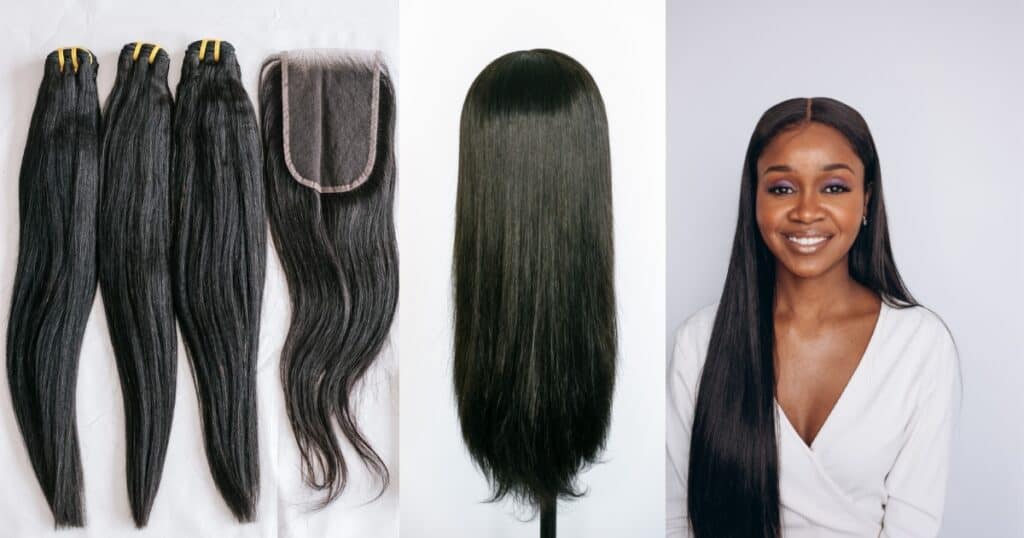
Learning how to make a 4×6 closure wig at home might seem intimidating at first, but once you understand the process, it becomes much easier than you think. Over time, you’ll be able to customize your wig to match your personal style and achieve the natural look you prefer.
Making your own wig at home is a great way to save money and take control of your own look. It gives you a sense of freedom because you don’t have to rely on anyone else, you can create exactly what you want yourself.
This beginner-friendly wig-making tutorial is perfect for DIY lovers who want to learn how to make a 4×6 closure wig step by step. In this guide, you’ll learn how to create a natural-looking wig using Italian yaki hair bundles, a texture that blends beautifully with natural hair to achieve an everyday look.
You might want to bookmark this DIY closure wig post, because it’s a step-by-step guide you can always come back to.
What Is a 4×6 Closure Wig?
A 4×6 closure wig is a type of wig that features a lace closure measuring 4 inches wide and 6 inches long. This closure creates a defined parting space, allowing the wig to look more natural and realistic.The extended 6-inch parting area gives you more flexibility when styling your hair, whether you prefer a middle part or a side part.
A 4×6 closure wig can also be a great protective style for your natural hair. However, this depends on how well the wig is installed and maintained. When done correctly, it helps protect your natural hair while still allowing you to achieve a natural-looking finish.
Why Choose Italian Yaki Hair?
Italian yaki hair is a popular choice for this DIY closure wig because it closely mimics the look of relaxed or lightly textured natural hair. This texture blends well with your own hair, making it easier to achieve a natural and seamless finish. Because of this, you don’t need excessive blending or styling to make the wig look realistic. Another advantage is the flexibility it gives you when styling. Italian yaki hair can easily pass as your own hair, which makes it perfect for everyday wear. The main goal when wearing a wig is to make it look as natural as possible and this texture helps you achieve exactly that.
Materials You Need to Make a 4×6 Closure Wig
There’s a lot of truth in the saying, “good preparation is half the work.” I learned this the hard way when I made my very first wig. The first time I tried to make a wig, I didn’t have the right materials ready. I had to pause multiple times during the process just to go back to the beauty supply store. At the time, the nearest store was about 40 minutes away. What started in the early afternoon turned into a project that lasted well past midnight.
And the worst part? After all that time and effort, the wig didn’t even fit. It was too small. I had to start all over again, and it was frustrating. That experience taught me how important it is to be prepared before you begin. So unlike me, you won’t have to go through that. If you follow this step-by-step beginner-friendly guide and make sure you have all your materials ready, you’ll set yourself up for success.
Here are the materials you need to make a 4×6 closure wig with Italian yaki hair:
1. A 4×6 Closure
I’m using a 4×6 closure with 18-inch straight hair. I chose straight hair because the Italian yaki bundles were already an investment, and I wanted to stay within budget. Straight hair blends well with Italian yaki hair, so the difference in texture is barely noticeable.
2. Italian Yaki Hair Bundles
I used 3 bundles of Italian yaki hair in 20 inches. If you wonder how many bundles you need to make a closure wig.
Typically, you’ll need:
- 2 bundles → 8–14 inches
- 3 bundles → 16–20 inches
- 4 bundles → 22 inches and longer
The longer the hair, the more bundles you’ll need because longer hair has less volume.
3. A Wig Cap
Wig caps come in different types and sizes. I recommend to choose between:
- Adjustable wig caps
- Dome caps (commonly used by wig makers)
I used a small adjustable wig cap.
4. Needles
Curved (C-shaped) needles are best for wig making, but straight needles can also work. Choose what feels most comfortable for you.
5. Thread
You can use:
- Strong black cotton thread
- Nylon thread
Both work well I used nylon thread for this wig.
6. A Mannequin Head
I highly recommend using a canvas cork head instead of the small white foam heads. Those foam heads are often one-size and can cause your wig to turn out too small. This happened to me when I made my first wig.
Canvas cork heads:
- come in different sizes
- mimic the shape of a real head
- give better results
Make sure you measure your head circumference before choosing the right size. I have a 22 inch canvas cork head. 22 inches is considered to be an average headsize. But measure yours first.
7. Pins
Pins help secure the wig cap and guide your sewing. I recommend using T-pins.
8. A Pair of Scissors
Use sharp scissors for clean cuts.
9. A White Marker
This is especially helpful for beginners. You can draw guidelines on the wig cap to help you sew more accurately.
10. An Elastic Band
This helps secure the wig when you wear it.
11. Wig Comb
Adds extra security to keep the wig in place.
12. Wig Stand
There are two main types:
- Table clamp stands (portable)
- Adjustable floor stands
I personally prefer an adjustable stand, but choose what works best for your space.
Step-by-Step Guide on How to Make a 4×6 Closure Wig
Step 1: Prepare the Wig Cap
Start by setting up your wig stand and placing your canvas mannequin head securely on it. Next, place the wig cap on the mannequin head. Make sure you position it exactly how you plan to wear your wig. This step is important because it determines how your wig will fit once it’s finished.
Once the wig cap is in the correct position, use pins to secure it in place. This will prevent the wig cap from moving while you are sewing. If the wig cap shifts during the process, it can be frustrating to keep repositioning it. Even worse, it can affect the overall structure and fit of your wig.
Step 2: Place and Secure the Closure (and Draw Guidelines)
The first step in this process is securing the closure. Closure placement is very important because it determines how natural your wig will look. Personally, I like to place the front of the closure about half an inch (or one centimeter) past the edge of the wig cap. I find that this creates a more natural look and allows me to fully cover my natural hair without leaving any out.
However, another common method is to align the closure directly with the edge of the wig cap. This makes it easier to wear the wig slightly behind your natural hairline, which is a popular technique.
Whichever method you choose, make sure the closure is positioned correctly and lays completely flat. There should be no bumps or air pockets. The entire base (the part you will sew) needs to be smooth and secure. Once you are satisfied with the placement, use pins to hold the closure in place. The pins will help keep everything flat and stable while you sew.
Next, carefully sew the closure onto the wig cap. After securing the closure, you can create guidelines on the wig cap using a white marker. These guidelines will help you stay organized and show you exactly where to sew the hair bundles. If you’re unsure where to place the guidelines, you can follow a simple pattern to map out the direction of your tracks.
Step 3: Sew the Bundles
Once your closure is secured and your guidelines are in place, it’s time to start sewing the hair bundles onto the wig cap. It’s best to begin at the back of the wig cap and work your way upward, following the guidelines you created. This helps keep your wig neat and evenly constructed. When you finish sewing one row, you have two options: you can either cut the track or fold it over to continue sewing the next row.
Option 1: Cutting the Tracks (Beginner-Friendly)
Cutting the tracks is the easiest method and is recommended for beginners. It allows you to work more comfortably without worrying about technique. However, the downside is that cutting the tracks can lead to more shedding over time.
Option 2: Fold-Over Method (Intermediate Technique)
The fold-over method is a more advanced technique. Instead of cutting the track, you fold it over and continue sewing in the opposite direction. This method requires more precision, because the track must lay completely flat. If not done correctly, it can create bumps in the wig. These bumps may not be very noticeable with curly hair, but with straight or body wave hair, they can be more visible which is not the look we want.
Which Method Should You Choose?
The fold-over method reduces shedding significantly compared to cutting the tracks, making it a better long-term option. However, if you are just starting out, it’s perfectly fine to use the cutting method until you feel more comfortable.
Step 4: Finish the Wig Construction
Once you have finished sewing all the hair bundles, you can go back and fill in any gaps using your remaining hair. This ensures full coverage and gives your wig a fuller look.
The next step is to carefully cut the wig cap underneath the closure area. This helps create a more natural-looking part. Be very careful during this step and avoid cutting any of the stitches that are holding the closure in place.
After that, it’s time to attach the elastic band. The elastic band helps secure the wig and ensures a better fit when wearing it. Sew the elastic band on the inside of the wig, positioning it along the edges of the closure area. To find the right length, measure the elastic band around your head where the wig will sit. Then cut it about one to two inches shorter to create a snug and secure fit.
Finally, sew a wig comb at the nape area (the back) of the wig cap. This provides extra security and helps keep the wig in place when you wear it.
Step 5: Customize the Wig
At this point, you’ve sewn the closure, added the hair bundles, attached the elastic band, and cut the wig cap under the closure. Your Italian Yaki wig is almost done. Now comes the second part of the process: customization. Customizing your wig is what makes it look more natural and tailored to your personal style.
Plucking the Hairline
One common method is to pluck the hairline of the closure using tweezers. This helps create a more natural, less dense look. This step is especially useful if you plan to wear your wig without leaving any of your natural hair out. If you decide to pluck, take your time. It’s very easy to overpluck the closure, and once that happens, it cannot be undone. Start slowly and pluck small amounts at a time until you achieve your desired look. If you plan to wear your wig slightly behind your natural hairline, plucking is not always necessary.
Creating the Parting Section
Next, you can define your parting area. You may choose to pluck the part slightly to make it look more realistic, but as a beginner, this step is optional. The wig can still look good without it.
Adding Baby Hairs (Optional)
Another customization option is creating baby hairs. The length and fullness of the baby hairs depend on your personal preference. Take your time with this step as well, but remember it’s completely optional. If you don’t like the look of baby hairs, you don’t need to add them.
Step 6: Style the Wig
Styling the wig is usually the most enjoyable part of the process, because this is where you can get creative and make the wig your own. At this stage, you can cut the hair to your preferred length or shape it into the style you like. You can also choose to straighten or curl the wig, depending on the look you want to achieve.
For my wig, I prefer a simple and easy-to-maintain hairstyle that fits my busy day-to-day routine, so I’m going for a sleek, bone-straight look. I use a flat iron with titanium plates, which helps minimize heat damage while straightening the hair. Always remember to use a heat protectant before applying heat to your wig. This will help protect the hair and keep it looking healthy for longer.
Tips for a Natural-Looking Wig
Creating a natural-looking wig comes down to small details. Here are some tips to help you achieve a more realistic finish:
1. Match Your Hair Textures
Make sure the texture of your closure matches the texture of your hair bundles. For example, avoid using a straight closure with curly bundles. A mismatch in texture can make the wig look unnatural.
2. Avoid Overplucking the Closure
Be careful not to overpluck the hairline. Once too much hair is removed, it cannot be fixed. Overplucking can make the lace more visible and make it harder to achieve a natural look. Always start by plucking a small amount and gradually adjust if needed.
3. Blend the Lace Properly
Proper blending is key to making your wig look natural. You can tint the lace of your closure to better match your skin tone. Avoid wearing a wig with a visible white or transparent lace that doesn’t blend with your complexion, as this will be noticeable.
4. Define Your Parting Section
Apply a concealer that is one to two shades lighter than your skin tone to the parting area. This helps create a more defined and natural-looking scalp effect. I personally prefer my concealer to be one to two tones darker than my skin tone.
5. Keep Styling Simple
Avoid using too many styling products. Excess product, especially hair serum, can weigh the hair down and make it look greasy instead of natural. A simple, clean finish often looks the best.
Common Mistakes to Avoid
There are a few common mistakes to avoid when making a 4×6 closure wig, especially as a beginner. One of the biggest mistakes is using the wrong canvas head size or a wig cap that is too small or too large for your actual head size. This can affect the fit of the entire wig. Another mistake is placing the closure incorrectly. Since the closure is the most important part of the wig, wrong placement can throw off the whole look and make the wig appear unnatural. It is also important not to skip customization. Even small customization steps can make a big difference in achieving a natural-looking result. But most importantly, do not rush the process. If you notice that a stitch is misplaced or something does not look right, fix it immediately. Taking your time will give you a much better final result.
Conclusion
This is the full breakdown of how to make a 4×6 closure wig at home. If you’ve followed the steps above, you’ve just finished making your own wig, so take a moment to be proud of yourself. This is not a small project, especially as a beginner. With the right materials, proper preparation, and a little patience, you can create a beautiful and natural-looking wig at home. The more you practice, the easier it will become. Over time, you’ll be able to adjust, improve, and customize your wigs exactly the way you like. You can even recreate this process to achieve even better results.
Don’t be too hard on yourself if it’s not perfect the first time. Learning a new skill takes time, and every attempt will help you improve. Most importantly, learning how to make your own wig is worth it. Not only will you save money, but you’ll also gain the freedom to create and style your hair on your own terms. So take your time, trust the process, and do not be afraid to make it your own.
xx,
Cher
Recent Blog Post

How to Make Steamed Scallion and Ginger Chicken (Easy Recipe)
Steamed scallion and ginger chicken is a simple, flavorful dish that doesn’t require many ingredients…

My Simple Hair Care Routine for Healthy Hair (Beginner Friendly)
Keeping your hair healthy doesn’t have to be complicated. For a long time, I believed…

How to Stay Consistent When You Feel Unmotivated
Staying consistent sounds simple, but it becomes difficult when you don’t feel motivated. There are…
